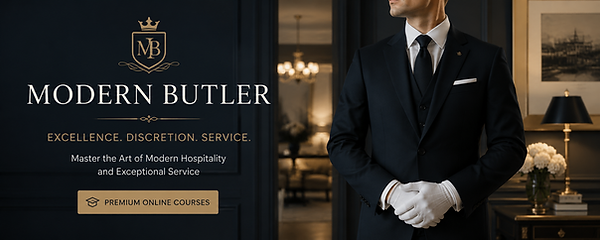
Butler Training
Professional butler training is built on the traditions of private service where discretion, attention to detail and refined hospitality are essential.
While the role of the butler has evolved in modern environments, the principles that underpin professional service remain remarkably consistent. Training focuses on developing the technical skills, professional conduct and service awareness required to operate confidently within private households and luxury environments.
For those exploring the profession, understanding the structure of butler training can provide valuable insight into the standards expected within private service.
What Does Butler Training Involve?
Butler training typically focuses on a combination of hospitality expertise, etiquette and practical service skills.
These areas are designed to prepare individuals for the environments in which professional butlers operate, including private households, luxury events and high-level hospitality settings.
Training often includes areas such as:
• formal dining and table service
• wine and beverage service
• guest reception and hospitality
• household organisation
• professional conduct and discretion
• attention to detail in service environments
These skills form the foundation of the profession and are refined through experience within real service environments.
The Importance of Service Etiquette
Etiquette plays an important role in butler training because private service environments often require a level of refinement that goes beyond standard hospitality.
Understanding the traditions behind formal service helps professionals maintain the polished standards expected within private households and exclusive events.
Our butler etiquette guide explains many of the principles that underpin these service traditions.
Experience and Practical Skills
While training provides an introduction to the profession, many experienced butlers develop their expertise through practical experience.
Working within hospitality, luxury events or private households allows individuals to refine their service awareness and develop the ability to anticipate the needs of guests and principals.
Understanding what a butler actually does in real service environments can help individuals appreciate how these skills are applied in practice.
Butler Training for Modern Private Service
The expectations of modern private households often require butlers to be adaptable and capable of operating in a variety of environments.
Today’s butlers may support private residences, luxury events or high-profile environments where discretion and professionalism are essential.
Clients who engage professional butler services often value individuals who demonstrate both technical skill and the composure required within private service.
Learning the Profession
For individuals interested in the profession, butler training provides an introduction to the standards that define private service.
Our guide explaining how to become a butler in the UK explores the different career paths that may lead into the profession.
Some individuals begin within hospitality, while others pursue specialist training programmes designed to introduce the traditions of private service.
The Traditions of British Private Service
British private service has long influenced hospitality standards around the world.
Butler training often reflects these traditions, focusing on professionalism, discretion and attention to detail in service environments.
These principles continue to shape the expectations of clients who engage private household butler services or luxury event butler service for refined hospitality environments.
Professional Butler Services
Schofield Butlers provides experienced professional butlers for private households, luxury events and distinguished clients who require refined service and discretion.
Our work reflects the traditions of British private service combined with the professionalism expected in modern private environments.
Butler Training FAQs
Do you need formal training to become a butler?
Formal training can provide a useful introduction to service standards, etiquette and hospitality techniques. However, many professional butlers develop their expertise through experience within hospitality, luxury events or private households.
Understanding how to become a butler in the UK often involves a combination of practical service experience and an understanding of private service traditions.
How long does butler training take?
Butler training programmes can vary significantly in duration. Some introductory courses last only a few days, while more comprehensive programmes may run for several weeks.
In practice, many experienced butlers will confirm that the profession is ultimately developed through real-world service environments where attention to detail and professionalism are refined over time.
What skills are taught in butler training?
Butler training typically focuses on hospitality skills and service etiquette. These may include:
• formal dining and table service
• wine and beverage service
• guest reception and hospitality
• household organisation
• discretion and professional conduct
These skills form the foundation of private service and are applied within both luxury event butler service and private household butler services.
Is butler training necessary to work in private service?
While formal training can be beneficial, it is not always required.
Many individuals enter the profession through hospitality or service environments where they gradually develop the skills required within private households and luxury hospitality.
Learning what a butler actually does in professional environments often provides a clearer understanding of the profession than theory alone.
Where do professional butlers work?
Professional butlers may work in a variety of environments including:
• private households
• luxury estates
• formal events and private dinners
• yachts and private travel environments
• high-level hospitality settings
Clients who engage professional butler services typically expect exceptional standards of service, discretion and professionalism.